

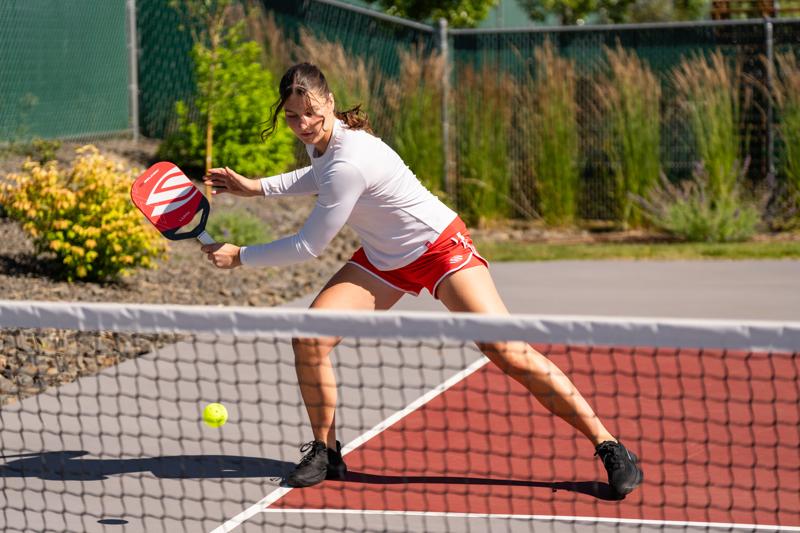
As of Jan. 1, 2026, USA Pickleball has officially updated its rulebook. While many of the core mechanics remain the same, there are several key revisions aimed at clarifying gray areas, improving sportsmanship, and making the game more inclusive.
Here is a breakdown of the most significant changes you need to know for the new year.
1. The death of the "freeze" in rally scoring
One of the most talked-about updates involves rally scoring. Previously, teams could only score the match-winning point while they were the serving team, often leading to a "freeze" where a leading team struggled to close out the game.
- The Update: Either the serving or receiving team can now score the game-winning point. This change ensures that match momentum stays fluid and prevents games from stalling at the finish line.
2. Higher standards for a legal serve
To reduce the frequency of illegal "sidearm" serves and difficult-to-call heights, the rulebook has added more weight to the volley serve requirements.
- "Clearly" Legal: The rules now state that the upward arc, the paddle head position (below the wrist), and the contact point (below the waist) must all be clearly visible and legal.
- The Consequence: In officiated matches, if a serve is borderline or too close to call, referees are now instructed to rule it a fault rather than giving the server the benefit of the doubt. Additionally, players are explicitly forbidden from using their fingers to add spin to the ball during the release.
3. Tightened rules on sportsmanship and conduct
USA Pickleball is taking a harder stance on "gamesmanship" and aggressive behavior.
- Pre-match Authority: Referees can now issue verbal warnings or technical fouls before a match even begins — this includes the warm-up period and pre-match briefings.
- Ejections: The language regarding physical violence and property damage has been strengthened. Tournament directors now have clearer authority to eject players for acts of paddle or ball abuse that cause injury or damage the venue.
4. Court play and line call clarifications
Several "common sense" updates have been added to prevent unnecessary disputes during a rally.
- Prompt Line Calls: Players must make "out" calls immediately. If a player waits to see if their partner can return the ball before calling it out, the ball will be considered "in."
- The Net Post Rule: If a ball legally crosses the net, bounces in the opponent's court, and then spins or blows into the net post, it is no longer an automatic fault on the hitter. It is now treated as a dead ball, and because it already landed in, the hitter wins the point.
- Extra Balls: If a second ball falls out of your pocket or is visible to an opponent during a rally, it is a fault.
5. Spectator help
The rules regarding outside interference have become stricter to ensure the integrity of the game.
- Mandatory Rule: The phrase "should not" consult spectators has been changed to "must not." Players who ask fans or bystanders for help with a line call may now receive a warning or a penalty.
6. Expanded adaptive standing division
In a major step for inclusivity, the 2026 rulebook formalizes the Adaptive Standing Division for players with significant mobility or balance impairments.
- Two-Bounce Rule: Eligible adaptive players are permitted to let the ball bounce twice before returning it. The second bounce can land anywhere on the playing surface.
- Hybrid Play: In doubles where only one player is eligible for the adaptive rule, the two-bounce allowance applies only to that specific player, not their partner.
Why these changes matter
For the average recreational player, the game will feel largely the same. However, these updates are designed to remove "legal loopholes" and reduce arguments on the court. Whether you're playing in a local park or a sanctioned tournament, these 2026 updates aim to keep the game fair, fast-paced, and focused on skill rather than semantics.